

As I come to the end of my third year as President of the Access Consultants Association (ACA), I do so with an enormous sense of pride, gratitude and optimism for the future.
My involvement with ACA began in 2010, when I joined the ACA Management Committee as an ordinary member. Since then, for most of the past 16 years, I have continued to contribute to the ACA in one capacity or another. This long association has given me the privilege of seeing ACA evolve and has reinforced my belief that professional associations are built through the sustained commitment of members who give their time, knowledge and experience for the benefit of the profession.
It has been an extraordinary three years as President.
When I first stepped into the role, ACA was navigating a period of change and growth. Today, we have a stronger identity, a stronger professional voice, stronger national connections and a much stronger foundation for the future.
The journey has never been about one person. It has been about what we have achieved collectively as an Association.
Over the past three years, ACA has strengthened its advocacy, expanded its engagement with government and industry, invested in its digital infrastructure, supported the development of our profession and ensured that access consultants have a voice when important decisions are being made about accessibility and the built environment.
As this is my final year as President, I would like the latitude to reflect on what we have achieved together in the last three years and, importantly, acknowledge the people whose commitment has made it possible.
BUILDING A STRONGER ASSOCIATION
One of the most important achievements has been strengthening ACA as a professional organisation with a clear identity and a clear voice.
During the first year, we introduced the shorter and sharper trading name Access Consultants Association (ACA) in response to member feedback.
We have continued to build that identity through advocacy, professional representation, education, digital communication and engagement with government, regulators, standards bodies and the broader design and building industry.
Our goal has always been for ACA to be more than an organisation that responds to changes affecting our profession. We wanted ACA to help shape those changes.
I believe that over the past three years we have demonstrated that we can do exactly that.
ADVOCACY THAT MAKES A DIFFERENCE
ACA’s advocacy over the past three years has been significant.
We have provided technical advice, submissions and professional input to government departments, regulators and industry organisations on matters that directly affect accessibility and the work of access consultants.
Our advocacy to the NSW Department of Planning regarding Housing SEPP provisions dealing with housing for seniors and people with disability was particularly successful, with the majority of ACA’s recommendations taken up by the Department.
ACA has also contributed to discussions with the Australian Human Rights Commission regarding proposed Design Guidelines for Access and Inclusion in Residential Development and the proposed update to AS 4299 — Adaptable Housing.
At a national level, ACA has advocated to the Australian Building Codes Board and the Attorney-General’s Department regarding the incorporation of the Livable Housing Design Standards and AS 1428.1-2021 into the National Construction Code.
These achievements demonstrate the value of having a united professional voice.
An individual access consultant can influence some projects.
A strong professional association can influence the systems, standards, policies and regulations that affect thousands of projects and, ultimately, the lives of many Australians.
SHAPING AUSTRALIAN STANDARDS
One area of which I am particularly proud is ACA’s continued contribution to Australian Standards.
Over the past three years, ACA members (particularly Mark Relf AM, Eric Martin AM and Angela Roennfeldt, among many others) have contributed significant technical expertise through the ME-064 Committee and the development of AS 1428.6 – Fixtures and Fitments.
Following extensive technical work and consideration of public comments, AS 1428.6 is progressing towards publication as an Interim Standard aimed towards the end of 2026.
This is an important milestone for our profession and demonstrates the depth of expertise within ACA and the important role access consultants can play in developing national technical guidance.
I would like to acknowledge all ACA members who have contributed their time, expertise and professional judgement to this work. Their contribution, often undertaken quietly and voluntarily, will have an impact far beyond the individuals involved.
ADAPTABLE HOUSING
ACA has continued its advocacy and technical work towards updating AS 4299 – Adaptable Housing.
Accessible and adaptable housing remains a critical issue for Australia’s future, and ACA must continue to advocate for standards that reflect contemporary expectations, lived experience and the needs of people with disability.
STRENGTHENING PROFESSIONAL PATHWAYS
During 2026, ACA introduced a new interview mechanism for Associate members seeking progression to Accredited membership.
This provides applicants with an opportunity to demonstrate not only their experience and technical knowledge, but also their understanding of the professional responsibilities associated with being an ACA Accredited member.
It reinforces the value of accreditation and helps ensure that our profession continues to develop with strong professional standards at its core.
I thank the Membership Committee, particularly Chairperson Lynda Wilem, Hamish Murray and Francis Lenny, for the considerable responsibility they undertake in assessing applications and supporting the professional development of our members.
A YEAR OF PARTICULAR SIGNIFICANCE
2026 has been a particularly significant year for me personally.
Earlier this year, I was deeply honoured to be appointed a Member of the Order of Australia (AM) in the Australia Day 2026 Honours List for significant service to architecture and to people with disability.
I accept this recognition not as an individual achievement, but as recognition of a career shaped by many people, organisations and communities, in particular the ACA community. My work has always been driven by the belief that architecture has a responsibility beyond buildings: to support dignity, inclusion, independence and participation.
The honour has given me an opportunity to reflect on how much the profession has evolved and on the importance of continuing to advocate for accessibility, inclusion and better outcomes for people with disability. It has also reinforced the value of professional associations such as ACA in creating a collective voice for change.
I am particularly grateful to the many mentors and colleagues who have influenced my career. Among the most significant have been Mark Relf AM and Howard Moutrie, both of whom have been important mentors to me professionally and personally. Their knowledge, generosity and willingness to challenge and encourage me have helped shape the way I approach accessibility, professional practice and leadership.
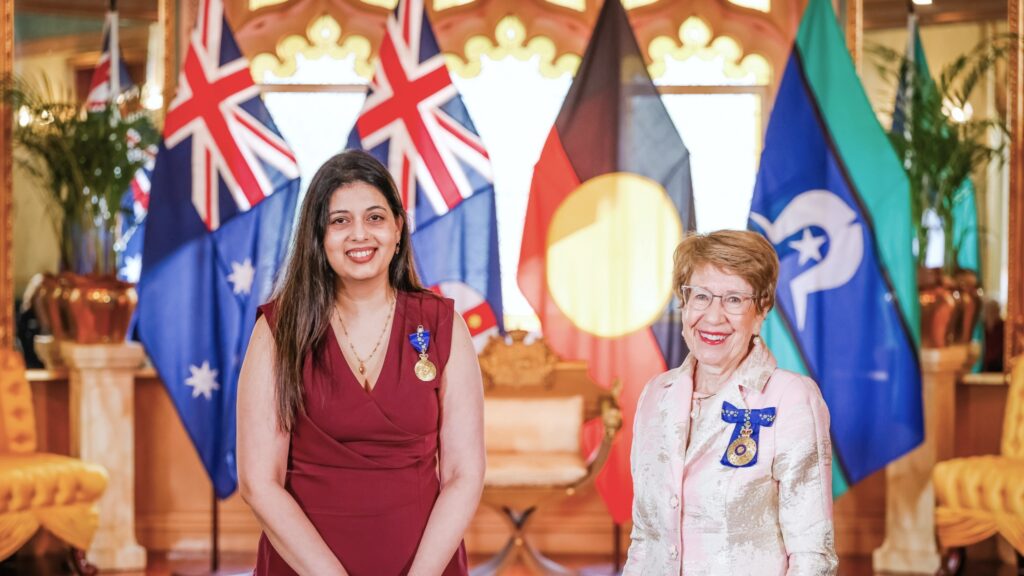
(left to right): Farah Madon AM and Governor of New South Wales, Her Excellency the Honourable Margaret Beazley AC KC
RECOGNISING THOSE WHO HAVE BUILT ACA
In 2025, we took an important step in recognising ACA members who have made a significant and lasting contribution to the Association. Bruce Bromley, Anita Harrop and Kellie Millar were awarded ACA Fellowships.
Professional associations are built by volunteers. Much of the work that keeps an organisation moving forward happens quietly and without recognition, through committee work, mentoring, technical advice, standards committees, membership assessments, conference organisation, state networks and countless hours supporting fellow members.
It was important to me that we recognise members whose commitment has helped shape ACA into the organisation it is today.
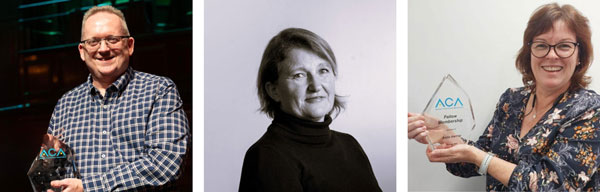
(left to right: Bruce Bromley, Kellie Millar, Anita Harrop)
THE BIGGEST CONFERENCE IN ACA’S HISTORY
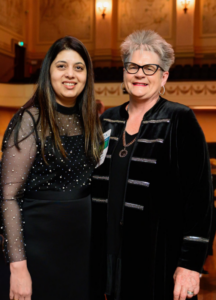
Farah Madon AM and Joe Manton
A major highlight was overseeing the delivery of the biggest conference in ACA’s history in Melbourne in 2025.
The conference was an extraordinary achievement and a wonderful reflection of the strength and enthusiasm of our membership.
I would particularly like to acknowledge Bruce Bromley who lead the conference organising committee and Joe Manton, who played an important role in developing the conference program and securing sponsorship, as well as the Victorian subcommittee and all members who contributed their time and expertise.
The conference brought members and professionals together for learning, discussion, networking and the sharing of knowledge and experience. Its scale and success demonstrated that ACA is not simply growing as a professional body: it is developing a strong national professional community.
I am also pleased to note that planning for the 2027 ACA Access Conference has already commenced, with the conference planned for October 2027 in Sydney. This provides an exciting opportunity to build on the success of Melbourne and continue strengthening ACA’s national presence.
NATIONAL AND INDUSTRY REPRESENTATION
Over my three years as President, ACA has maintained and strengthened representation across important professional and government forums, including:
- Australian Building Codes Board;
- National Disability Insurance Agency;
- Australian Human Rights Commission;
- Royal Australian Institute of Architects National Enabling Architecture Committee;
- Standards Australia;
- Changing Places Australia; and
- other industry and accessibility organisations.
Through these roles, ACA has been able to contribute specialist access expertise at the point where policy, regulation, standards and design approaches are being considered.
Accessibility should not be something considered after decisions have been made. The expertise of access consultants needs to be present from the beginning.
BUILDING THE NEXT GENERATION
ACA has continued to support professional development through CPD webinars, mentoring, technical information, Access Insight and networking opportunities.
Our membership pathway provides opportunities for Associate members to progress towards Accredited membership, helping build the next generation of qualified and experienced access consultants.
The profession will continue to evolve, and ACA has an important role in ensuring that emerging consultants have access to knowledge, mentoring and professional support.
One of the greatest responsibilities we have as professionals is not simply to accumulate knowledge, but to share it.
DIGITAL ACA, ACCESS INSIGHT AND STATE NETWORKS
The electronic version of Access Insight and the redevelopment of the ACA website have created valuable long-term resources for members.
Access Insight is now more than a publication. It provides an accessible repository of technical and professional information that members can refer to over time.
I acknowledge Bruce Bromley for the enormous amount of time and effort dedicated to the website redevelopment and Art (Suwat) Phonsawat for overseeing its ongoing management.
Over the past three years we have also established and supported ACA state networks, creating opportunities for members to connect locally while remaining part of a national organisation.
These networks are an important part of ACA’s future.
MEMBERSHIP AND FINANCIAL SUSTAINABILITY
ACA has continued to experience membership growth, with Associate members progressing towards Accredited membership.
This growth reflects both the increasing profile of the Association and the growing recognition of the importance of professional access consulting.
Financially, ACA has maintained a sound position, thanks in large part to our Treasurer, Howard Moutrie. Membership fees and educational activities remain important sources of revenue, allowing us to invest in member services, technology, events and the future development of ACA.
THE PEOPLE BEHIND ACA
I cannot reflect on these achievements without acknowledging the Management Committee and the many members who have contributed their time voluntarily.
I extend my sincere thanks to Hamish Murray (Vice President), Lynda Wilem (Secretary), Howard Moutrie (Treasurer), Francis Lenny, Doug Melloh, Daniel Bedwell and Art Phonsawat for their commitment and contribution. I also thank our administration officer, Liz Bray.
I acknowledge all ACA members who have served on committees, undertaken membership assessments, supported state networks, presented CPD webinars, contributed to Standards Australia, participated in conferences, mentored colleagues and provided technical expertise.
The real strength of an association is measured by the people who are willing to give their time to make its achievements possible.
THREE YEARS. ONE DIRECTION.
Looking back, I believe the past three years have been about one overarching objective: building a stronger ACA for the future.
We have strengthened the Association’s identity, advocacy, professional pathways, national representation, technical contribution and connections across Australia.
From the introduction of the ACA identity to the redevelopment of our website and Access Insight; from advocacy with government and the ABCB to contributions to Australian Standards; from state networks and CPD to the biggest conference in ACA’s history; from strengthening accreditation pathways to recognising the members who have helped build our Association; and through research that places lived experience at the centre of accessible design — the last three years have been a period of significant progress.
LOOKING TO THE FUTURE
As I prepare to step down as President and from the ACA management committee, the work of the Association must continue.
There remain important issues to address — accessibility in housing, the ongoing evolution of the NCC, standards development, professional recognition, emerging technologies, inclusive design and the need to ensure that people with disability remain central to decisions affecting the built environment.
ACA needs to continue to be ambitious.
We must continue to advocate.
We must continue to contribute.
We must continue to challenge assumptions.
And we must continue to ensure that the expertise of access consultants is recognised as essential to good design and inclusive communities.
A PERSONAL THANK YOU
Finally, I want to thank every member of ACA for the trust and confidence you have placed in me over the past three years as your President; and, more broadly, for the opportunity I have had to contribute to ACA in various capacities since 2010.
Being President has been an extraordinary privilege, but my journey with ACA has always been about more than holding a position. It has been about contributing to a profession I care deeply about and helping build an organisation that can make a meaningful difference.
There have been difficult issues, challenging conversations, long meetings and countless hours of work behind the scenes. But there have also been moments of achievement that have made every hour worthwhile.
My hope is that the culture of generosity, professionalism and advocacy that has characterised ACA will continue long after my presidency concludes.
I am proud of what we have accomplished together.
I am proud of the stronger voice ACA now has.
And I am proud that our Association continues to demonstrate that access consultants have an essential role to play in shaping Australia’s built environment.
I leave the presidency with enormous gratitude and, most importantly, with confidence in the future.
The foundations are strong.
The profession is growing.
The voice of access consultants is stronger.
And the opportunity to make a genuine difference has never been greater.
Thank you for giving me the privilege of serving as your President.
Farah Madon AM
President
Access Consultants Association