
by Howard Moutrie
Like Madrid, Barcelona is a big city, but whereas Madrid is a business centre, Barcelona is a tourist centre. It is flat, has good transport and is very accessible. It does have narrow and sometimes winding streets in the old areas but also wide streets and pathways in the newer areas. The newer, residential areas are designed on a grid pattern and there is currently a move to close some of these areas to traffic, making them more pedestrian friendly. At the time of my visit, this caused a temporary loss of accessibility in some parts. Again, as shown in Figure 1 luminance contrast for Tactiles Ground Surface indicators (TGSIs) are not existent, and yes, there are directional tactiles in this photo.
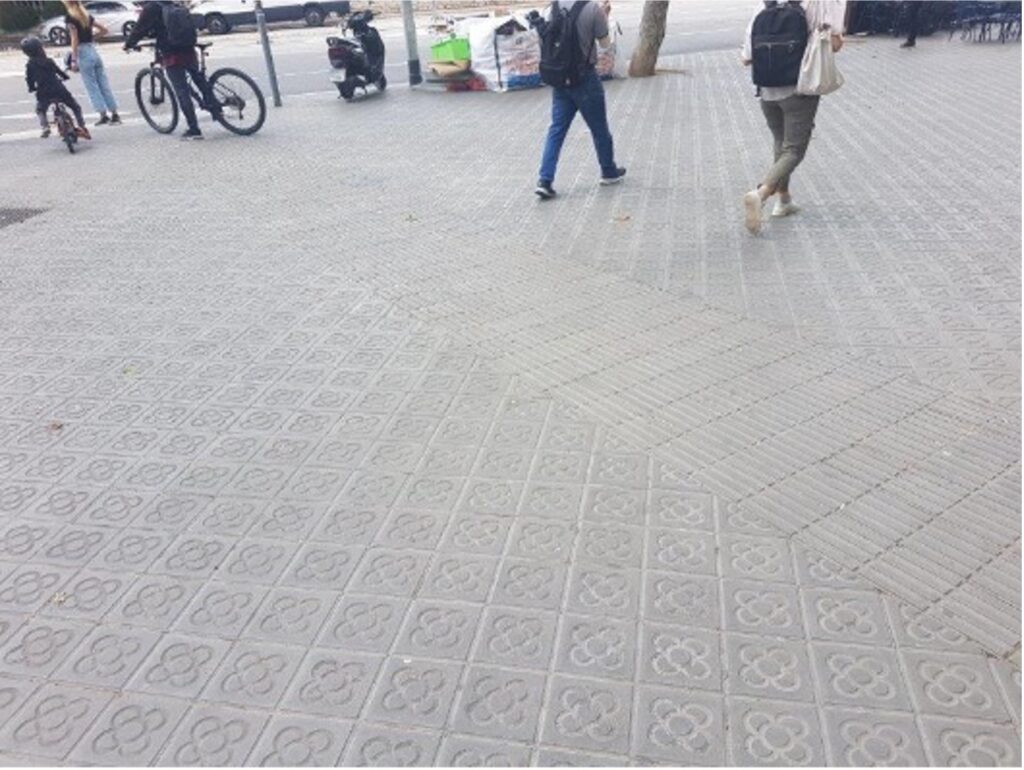
Figure 1 The Directional Tactile Ground Surface Indicators have no luminance contrast.
The metro system of Barcelona is reasonably accessible, and all buses are wheelchair accessible. There are also wheelchair accessible taxis available.
Barcelona is in the north-eastern part of the country, on the coast. In addition to the built environment its major attraction are the beaches. When I visited the beach, it was early morning, so it was not busy, but ramps take you from the pavement to the sand as shown in Figure 2.
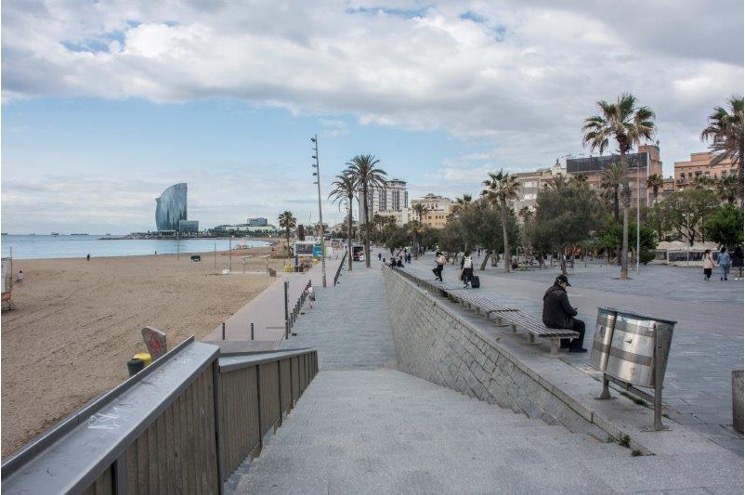
Figure 2 The ramp leading from the esplanade to the beach.
Also, like some council programs in Australia beach access is provided by beach mats provided to access the water. I understand many areas have aquatic wheelchairs, a hoist to transfer and lifeguards to assist in the process.
There are also accessible toilets and change rooms. In fact, the Barcelona beach was one of the few areas in Spain where I found free public toilets. However, TGSIs and contrast nosings are rare and handrails are not always provided.
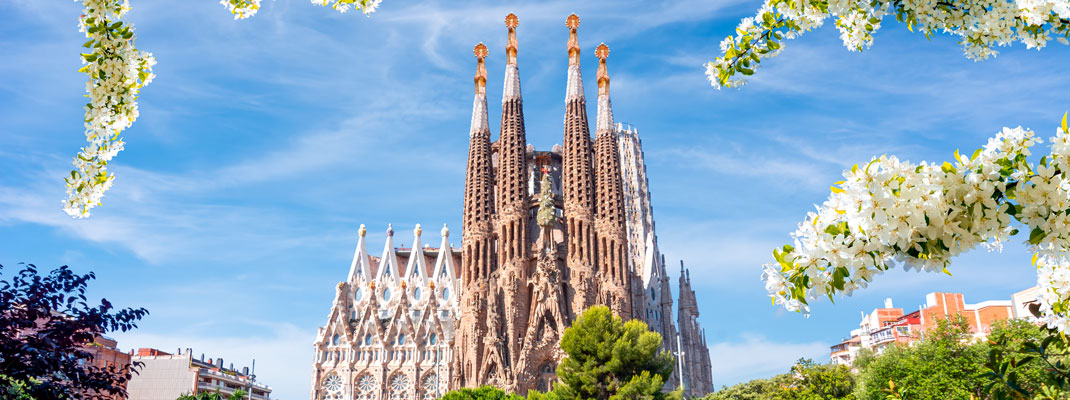
There is just so much to experience particularly if you are a photography tragic and architect like me. By far the biggest attraction is Antoni Gaudi’ s Sagrada Familia as shown in Figure 3, and the cathedral as shown in Figure 4. To go inside, you need to book in advance for a particular time (I recommend 3pm as it gets good light inside) but again wheelchair users get free admittance. There are steps, however, alternative access is provided except for the towers.
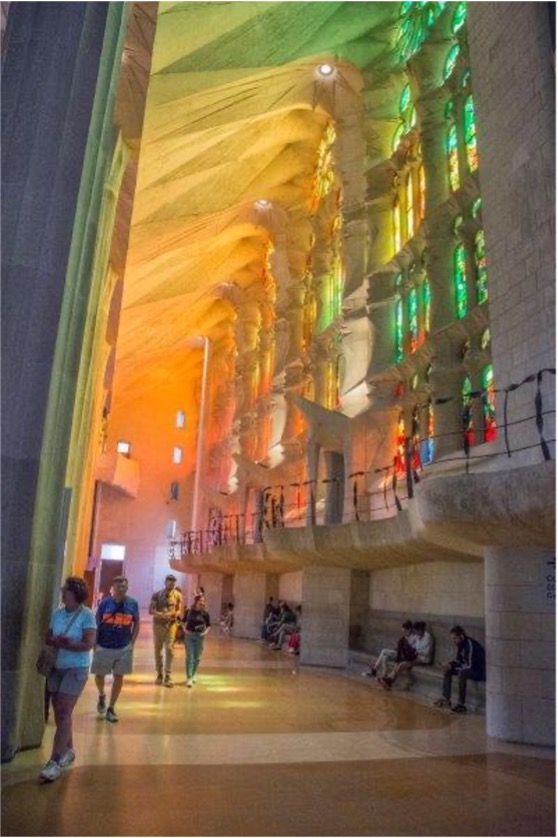
Figure 3 The internal view showing light flooding through the stain glass windows of the Sagrada Familia Cathedral
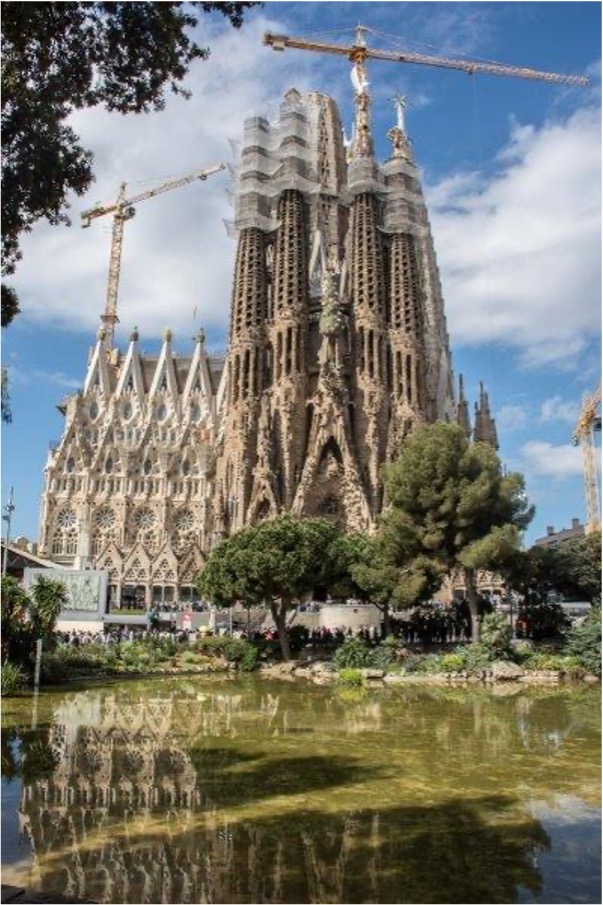
Figure 4 The Sagrada Familia Cathedrale external view of the Basilica
For lovers of art deco, a trip to Gaudi’s Casa Batllo or Casa Mia is worth a trip as shown in Figure 5. I went inside Casa Batllo and there is a small step at the entry, however portable ramps are available on request.
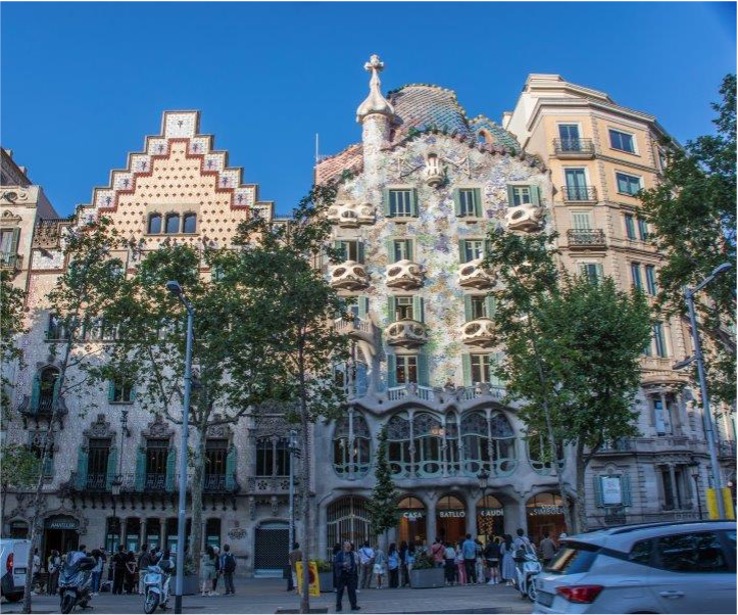
Figure 5 The front facade of Gaudi’s Casa Batlló
Like Australia, Spain has ratified the UN Convention on the rights of Persons with Disabilities, (CRPD) in which there has been a recent overhaul of the Spanish Constitution. Therefore, Spain implements the European Accessibility Act. Accordingly, reasonable adjustments are required on the condition that there is no impact on the historic integrity. Solutions typically involve temporary provisions such as smaller wheelchairs available onsite which are compatible with the size of the Casa Batllo lift, which currently only has a depth 1070mm.
These size restrictions and the requirement to transfer to an alternative wheelchair may not suit all users, or a desirable solution. Therefore, digital technology is provided by means of augmented reality tours, in instances where physical access is restricted due to the physical constraints of the building preventing access to areas such as the rooftop terrace.
Staff have access awareness training and can help if required, however, due to the heritage considerations don’t expect to find independent cues such as TGSIs, nosings, or AS1428.1 compliant handrails.
Another of Gaudi’s masterpieces is Parc Guell as shown in Figures 6 and 7.
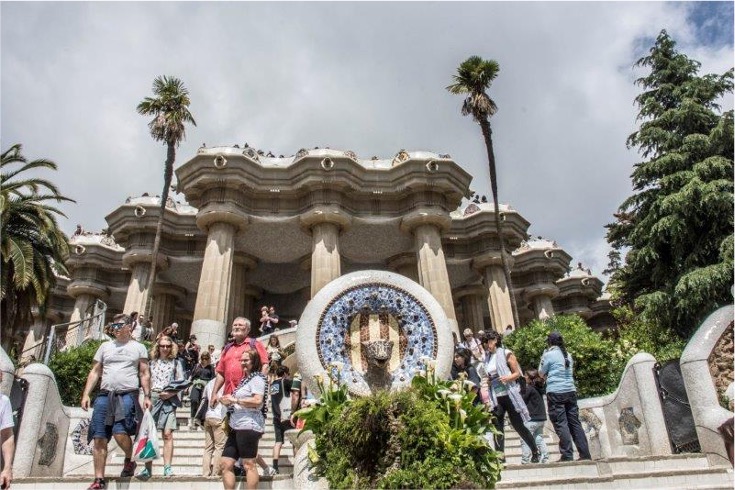
Figure 6 The main terrace to Parc Guell and multi – coloured mosaics guiding to the park entrance steps.
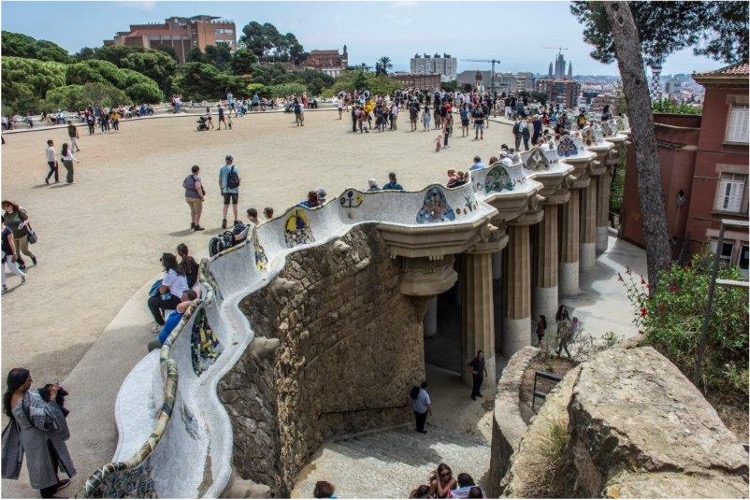
Figure 7 A view of some of the 86 columns that hold up the main terrace.
The park is elevated high and is a unique park. Therefore, getting to it can be tricky and if using public transport, the bus to the northern (upper) entry is the most accessible route. However, you may need to return to that gate rather than exiting at the lower entry which is less accessible due to the steps.
Inside the park, there are many paths, some with steps. There is a mobility map available for people with various levels of mobility indicating the flattest gradients and alternative pathways avoiding steps and indicating rest areas, so consulting this map is important.
One of the popular parts of the park is Nature Square and it gets quite busy. From there steps provide the quickest route down to the lower entry/exit but they can be quite congested. There is an accessible, circuitous path also as indicated by the mobility map. The park is advertised as a park for everyone and there are Braille signs and there is an App to guide you around the accessible parts of the park in addition to the map.
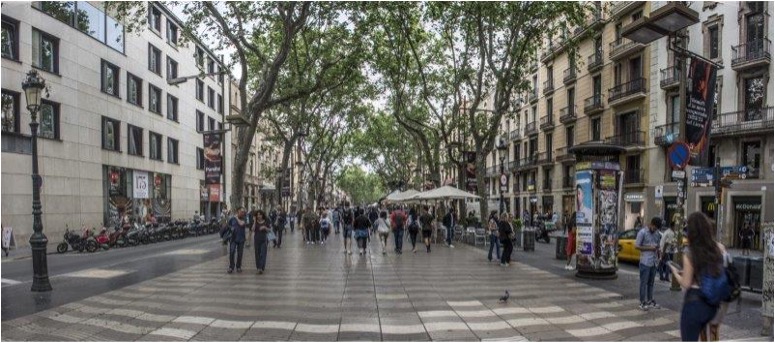
Figure 8 view of the Las Ramblas – Barcelona’s famous promenade
The popular Las Ramblas, as shown in Figure 8 is accessible, with a wide flat pedestrian boulevard which stretches 1.3 km and provides views of the old town and harbour of Barcelona. However, it can get extremely busy during peak tourist hours and despite accessible bus services, to be honest I don’t really see the attraction. I would rather spend time in the other areas.
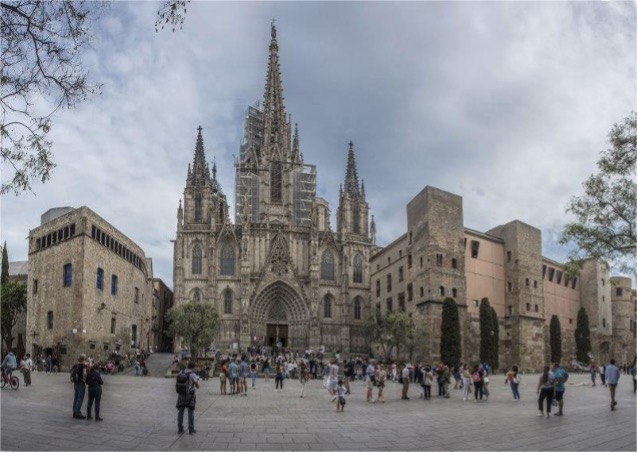
Figure 9 The Barcelona 14th Century Gothic Cathedral
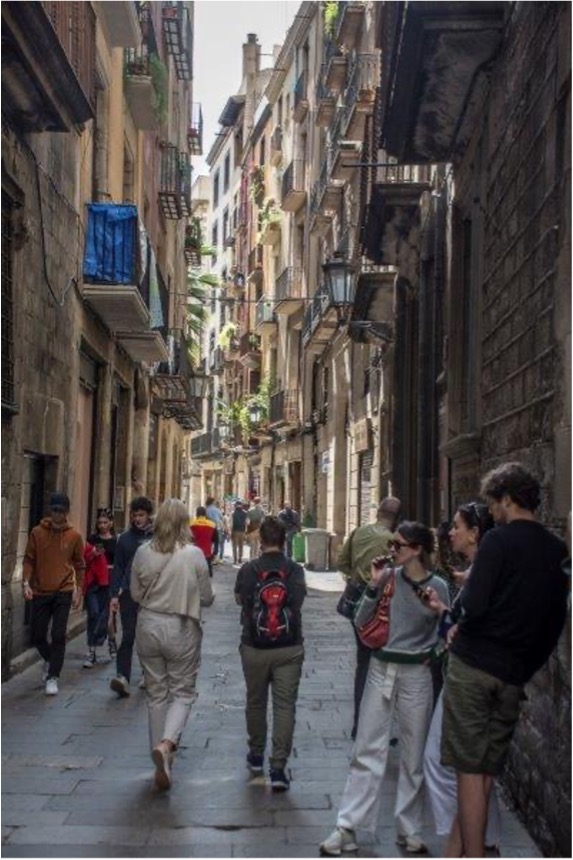
Figure 10 Medieval and Roman Streets
The Gothic Quarter, which is the old town of Barcelona is steep in parts, and the streets are narrow with uneven historic cobblestones as shown in Figure 10. However, according to many travel guides it is one of the most wheelchair accessible medieval centres in Europe and as such using a powered mobility device is an option.
The cathedral as shown in Figure 9 is accessed via stairs but there is a ramp around the side of the building and once inside it is accessible.
Although, I could easily have spent more time in Barcelona, I was determined to visit a couple of small medieval villages, namely Besalu as shown in Figures 12 and 13 and Rupit.
Weather wise it wasn’t great, but we managed some sun in between the rain.
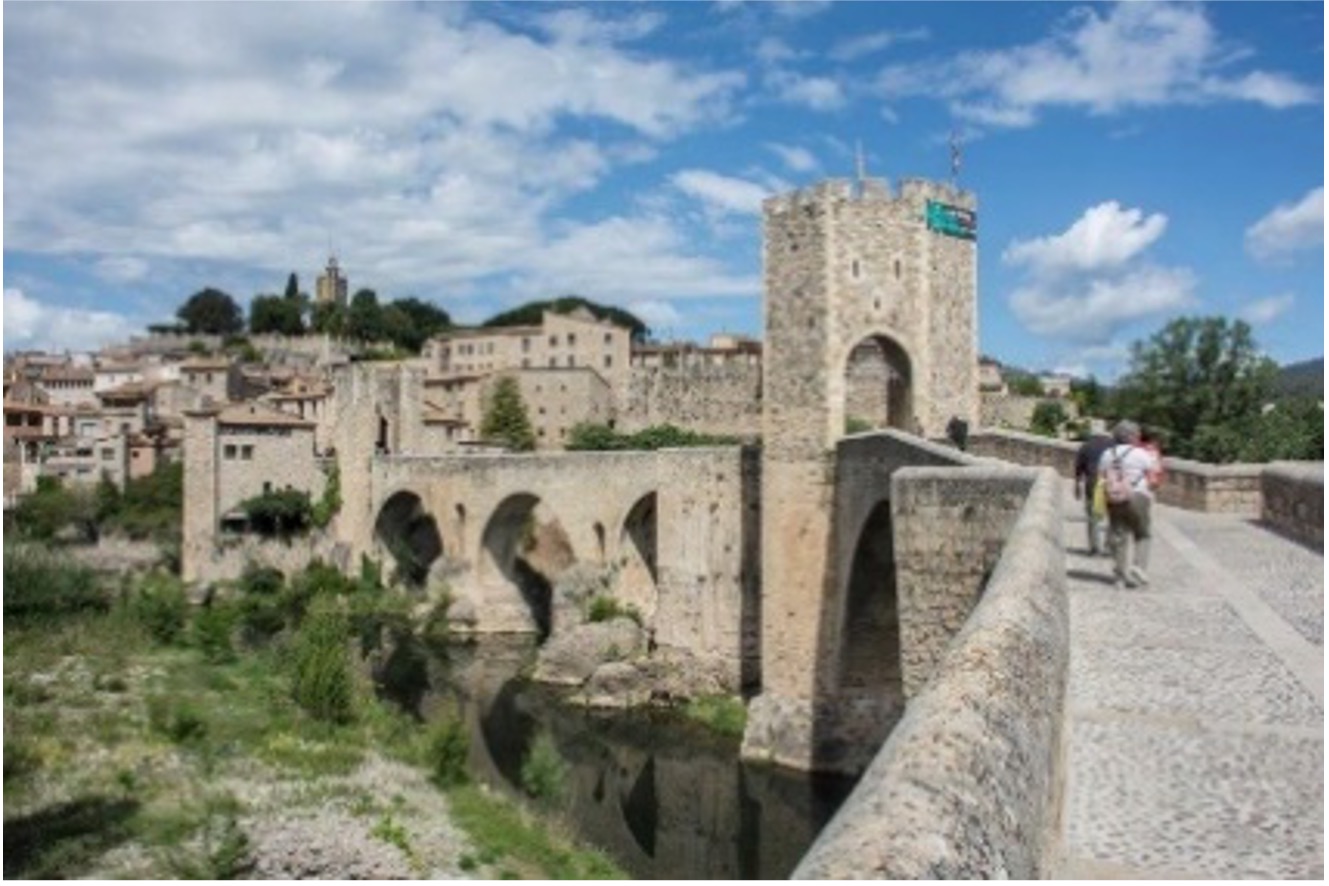
Figure 11 The Besalu Bridge
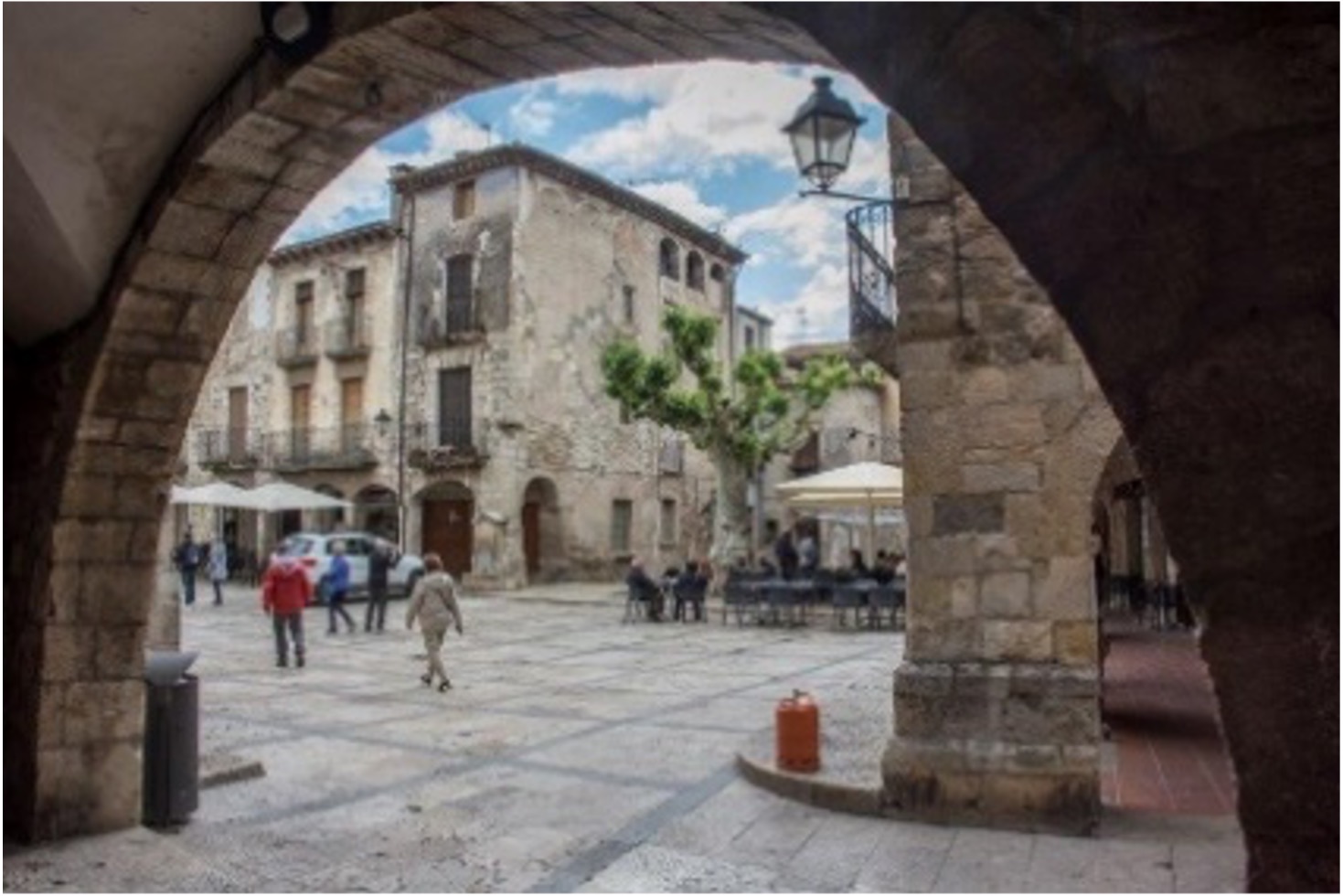
Figure 12 The Medieval archways of the Village of Besalu
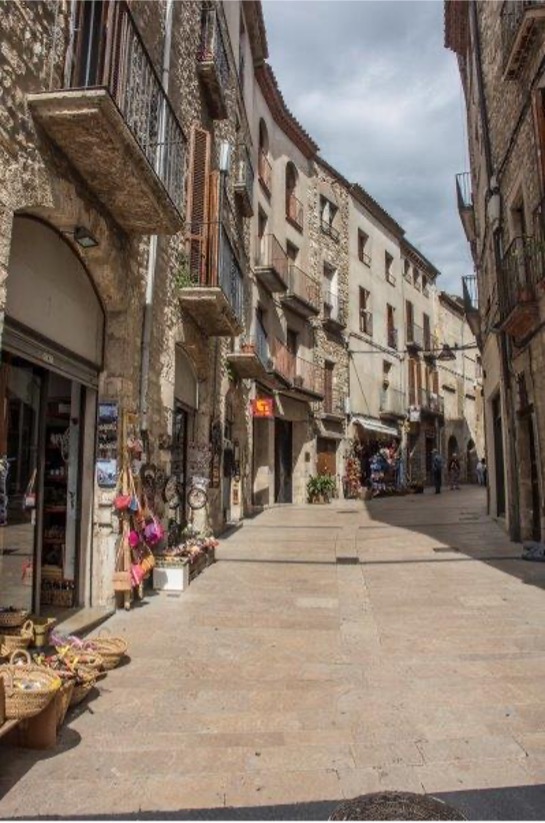
Figure 13 Cobblestone alleyways and stone facades to Besalu village
The village of Besalu was a small and catered for tourists. Before you cross the Besalu bridge as shown in Figure 11, there are shops and a public toilet. It is accessible in parts, although there are a few steps to the bridge, which makes independent wheelchair access difficult and uneven stone surfaces, further restrict access to some areas of the village.
Then to Rupit. You feel like you have gone back in time. However, due to medieval age there are uneven ground surfaces, which are a barrier to accessibility as shown in Figures 15 and 16.
Accessibility is restricted, but if you are mobile then it is a suitable place to explore. The main entry is via a bouncing suspension bridge as shown in Figure 14, alternatively there is road access, but it is an uneven surface.
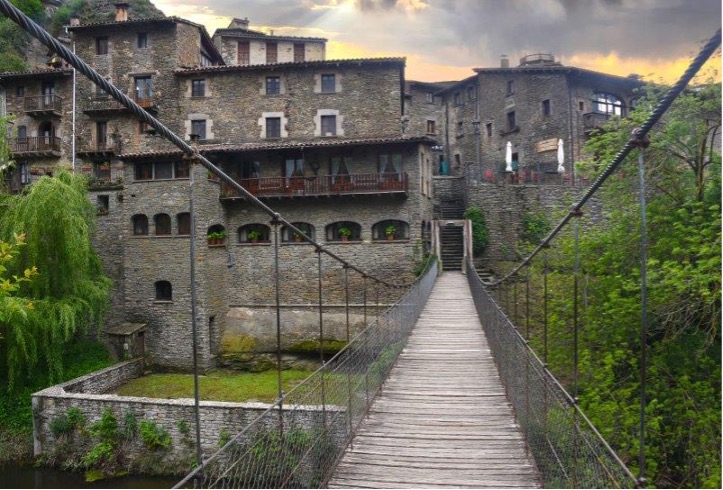
Figure 14 The Rupit suspension bridge
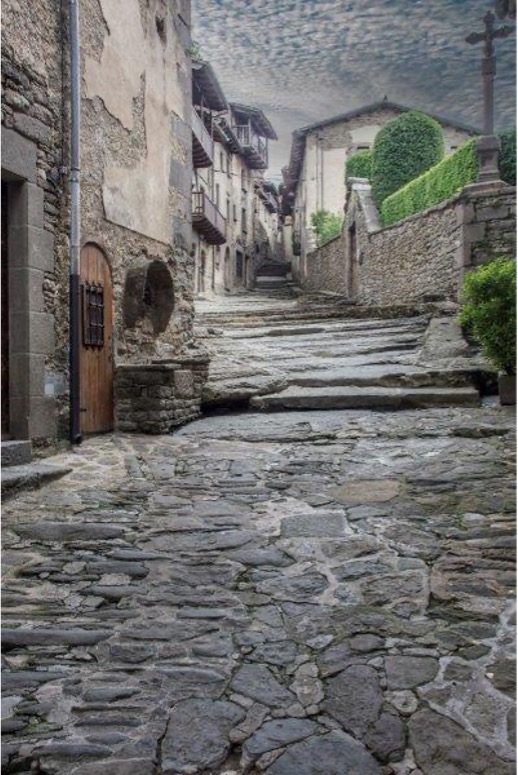
Figure 15 stepped stone cobbled streets to Rupit
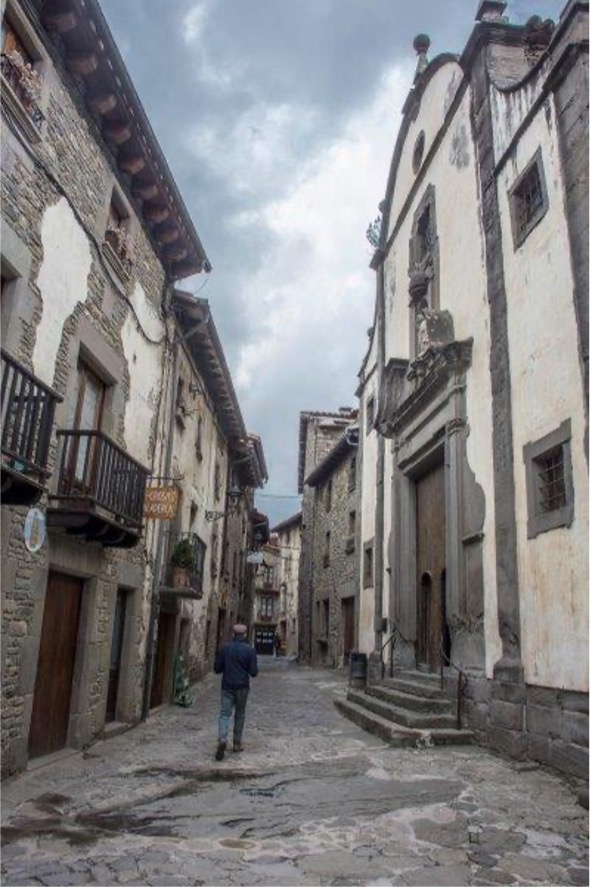
Figure 16 narrow sloping cobbled streets to Rupit
These villages are scenic, but Besalu and Rupit are difficult to access for people with varying levels of mobility. I went on a day tour, but both villages can be accessed via bus. However, travel advice from accessible travel advisors with expertise in European accessibility is recommended prior to planning the trips to these villages and all other areas of Barcelona covered in this article or trips to any other European destinations.